
How to Source Home Décor from India: A Buyer's Guide
A practical, step-by-step guide for retailers, importers, and DTC brands evaluating India as a home décor sourcing destination.
September 6, 2026
India has long been one of the world's most established sourcing destinations for home décor, and for good reason: a deep base of artisan skill, a wide range of materials worked at scale, and manufacturing clusters that have specialized in specific crafts for generations. But sourcing from any overseas market for the first time can feel daunting if you don't know what to ask, what to expect, or where things commonly go wrong. This guide walks through the practical steps a retailer, importer, or DTC brand should take when evaluating India as a home décor sourcing partner.
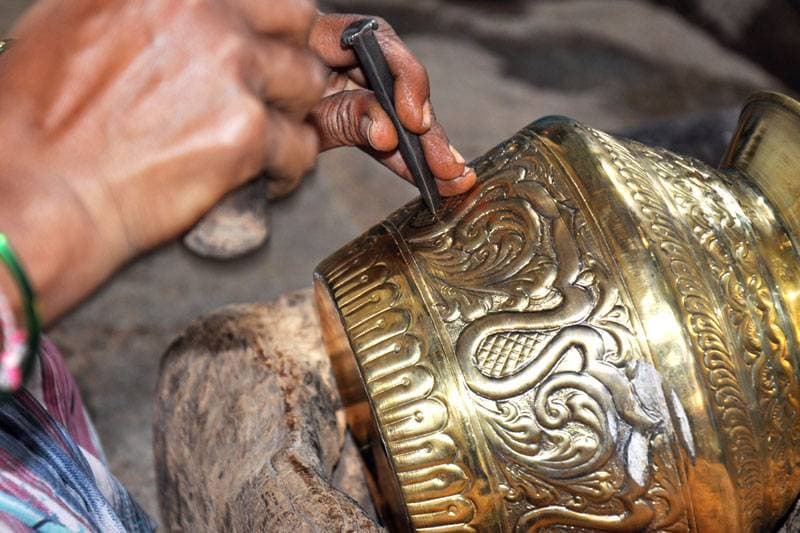
India's home décor and handicraft export sector is built around regional manufacturing clusters, each historically specialized in particular materials and techniques. Metal handicrafts, wood carving, glasswork, rattan and cane weaving, hand-knotted rugs and carpets, and decorative home accents are all produced across different hubs, often with generations of inherited craft knowledge behind them. For buyers, this translates into access to genuine artisan techniques, a wide range of material options under one sourcing relationship, and manufacturing capacity that can scale from small trial orders to larger repeat production.
That said, sourcing internationally always involves trade-offs: longer lead times than domestic suppliers, the need to manage logistics and customs across borders, and more upfront diligence to confirm you're working with a legitimate, capable exporter. The steps below are designed to help you manage those trade-offs deliberately rather than discovering them mid-order.
Before reaching out to any exporter, get specific about what you actually need. \"Home décor\" is a broad category, and the manufacturing process, materials, and finishing techniques differ significantly across it. Narrow your brief to the categories relevant to your business, for example:
Having a clear brief lets a supplier tell you quickly whether a product falls within their core capability or would require them to subcontract it out, which matters for both quality control and lead time.
Minimum Order Quantities (MOQs) exist because manufacturers need a certain batch size to make tooling, material procurement, and production runs cost-effective. MOQs vary by product complexity, material, and the supplier's own production setup, so always confirm the MOQ for the specific SKU you want rather than assuming a blanket number applies across a supplier's entire catalog.
As a general rule for first-time buyers: it's worth testing a supplier relationship with a modest order across a few SKUs before committing to a larger, multi-container purchase. This limits your risk while you evaluate quality, communication, and reliability firsthand.
No matter how good a supplier's catalog photography or product descriptions look, samples are the only way to properly evaluate material quality, finish, weight, packaging, and how a product will actually perform once it reaches your customers. A credible exporter should be able to provide samples before you commit to a bulk production run. When reviewing samples, pay attention to:
If you plan to place a private label order, this is also the stage to confirm branding elements such as logo engraving, hangtags, or custom packaging will be applied correctly.
Because you generally can't visit every supplier's facility in person before your first order, verifying documentation and registrations is an important substitute for in-person diligence. In India, relevant credentials to look for include:
Ask any prospective supplier to share these details directly. A legitimate, established exporter will have no hesitation providing them.
Handicraft production, especially anything involving hand-finishing, casting, or weaving, takes real time. Lead times typically run somewhere between 30 and 50 days from order confirmation, depending on the product, design complexity, and order volume. Build this into your own planning calendar, factoring in:
If you're planning a seasonal launch or a specific retail date, work backward from that date and build in buffer time. Rushing handmade production tends to compromise quality rather than speed things up meaningfully.
Get clear, in writing, on which Incoterm applies to your order (such as FOB, CIF, or EXW), since this determines who is responsible for freight, insurance, and customs clearance at each stage of the shipment. If you're new to importing, working with a freight forwarder who understands both the Indian export side and your own country's import requirements can save significant time and prevent costly misunderstandings at customs.
If branding matters to your business, whether you're a retailer wanting your own label on the product or a DTC brand building a distinct product line, raise this in your very first conversations with a supplier rather than after your first order ships. Private label capabilities to ask about include:
Suppliers experienced in private label and custom B2B development can guide you on which of these options are realistic for your chosen product category and MOQ, and can factor design and tooling time into your overall lead time estimate.
Sourcing home décor from India rewards buyers who do their homework upfront: a clear product brief, realistic timelines, sample-based quality checks, and verified supplier credentials. Indiecrafto is based in Moradabad, India's historic metal-handicraft export hub, and works across metal, wood, glass, rattan, home accents, and rugs and carpets, alongside custom B2B and private label development. As an EPCH and FIEO registered, IEC-licensed, GST-registered exporter serving buyers across the UK, Australia, the USA, and Europe, we offer standard MOQs of 20 to 25 pieces per SKU on selected products, production lead times of 30 to 50 days depending on the product and order, and samples available before any bulk commitment, so buyers can evaluate the relationship with the same diligence outlined above before scaling an order.
Ready to start? Send your requirement through our Sourcing Desk and we will confirm feasibility, MOQ, and lead time for your specific product.